Counter displays & PDQ trays
Compact product bins, compartmented trays, risers, literature holders, and countertop units designed for close-range merchandising.


Custom point-of-purchase displays
Counter displays, floor merchandisers, dump bins, product trays, standees, and custom-cut display components—planned for how the piece will hold product, assemble, pack, ship, and work in the space.
Start with an approved dieline, an existing display, product dimensions, a rough sketch, or a retail brief. We will review what is ready and identify the next production questions.
What does the display need to do?
A display category is only a starting point. Size, load, access, retailer requirements, campaign length, assembly, and shipping determine the final construction.
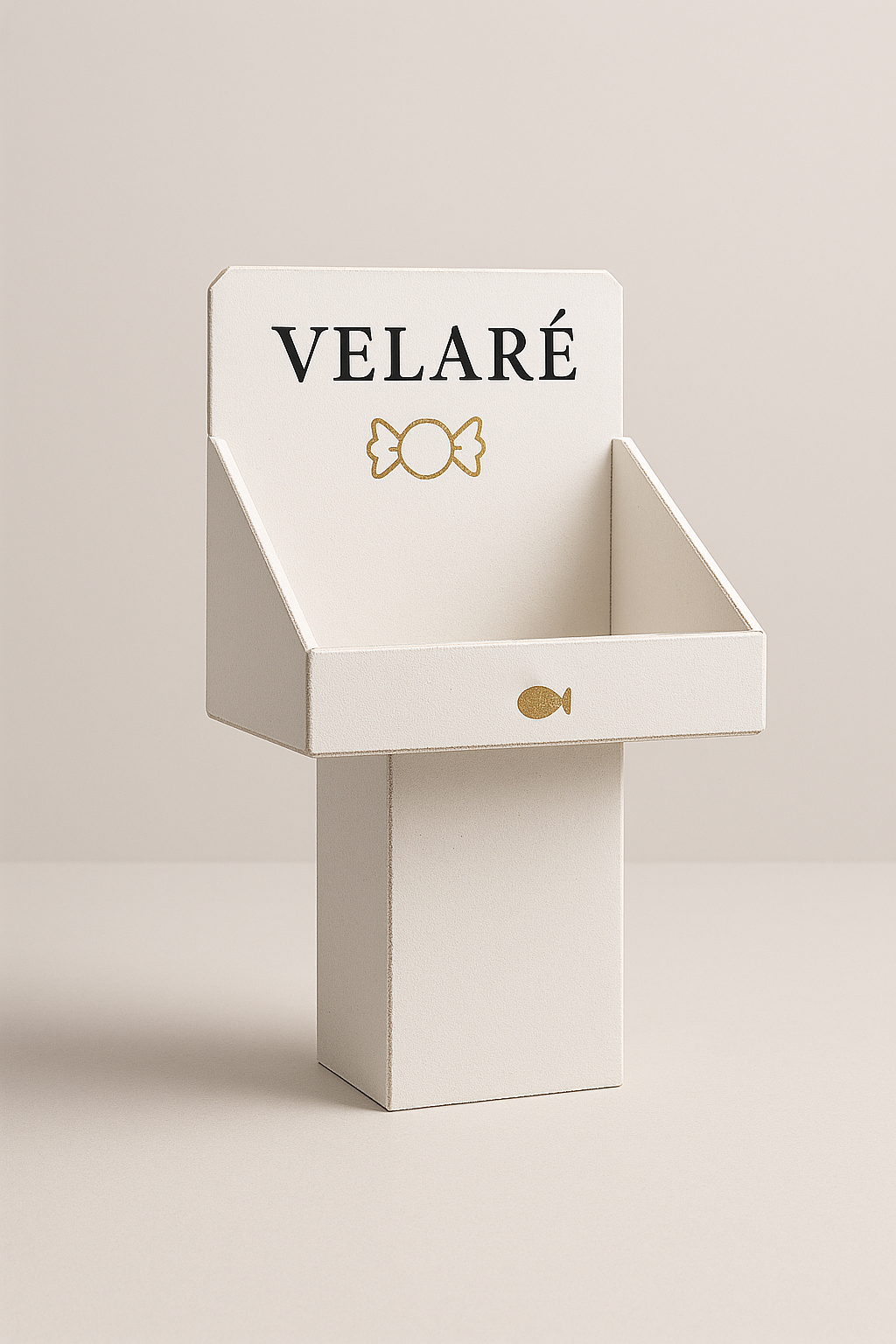
Compact product bins, compartmented trays, risers, literature holders, and countertop units designed for close-range merchandising.
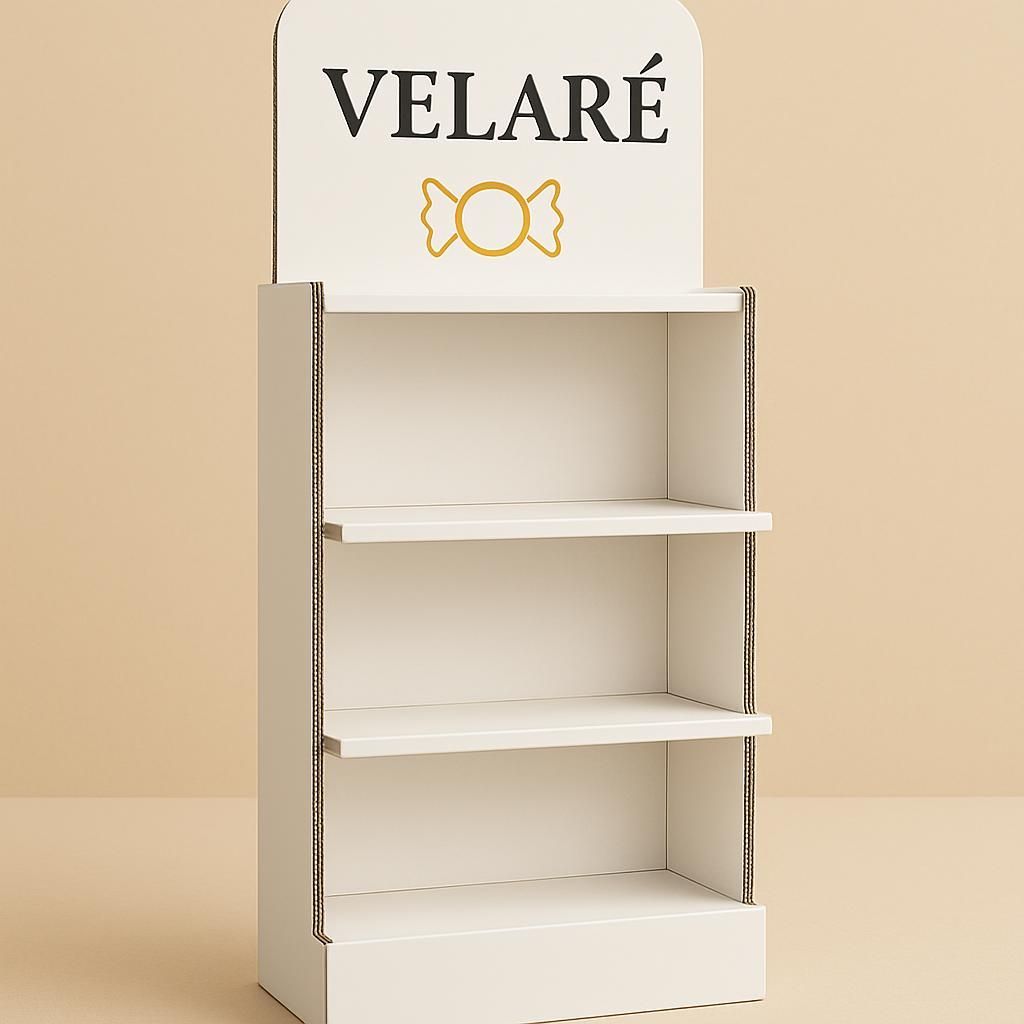
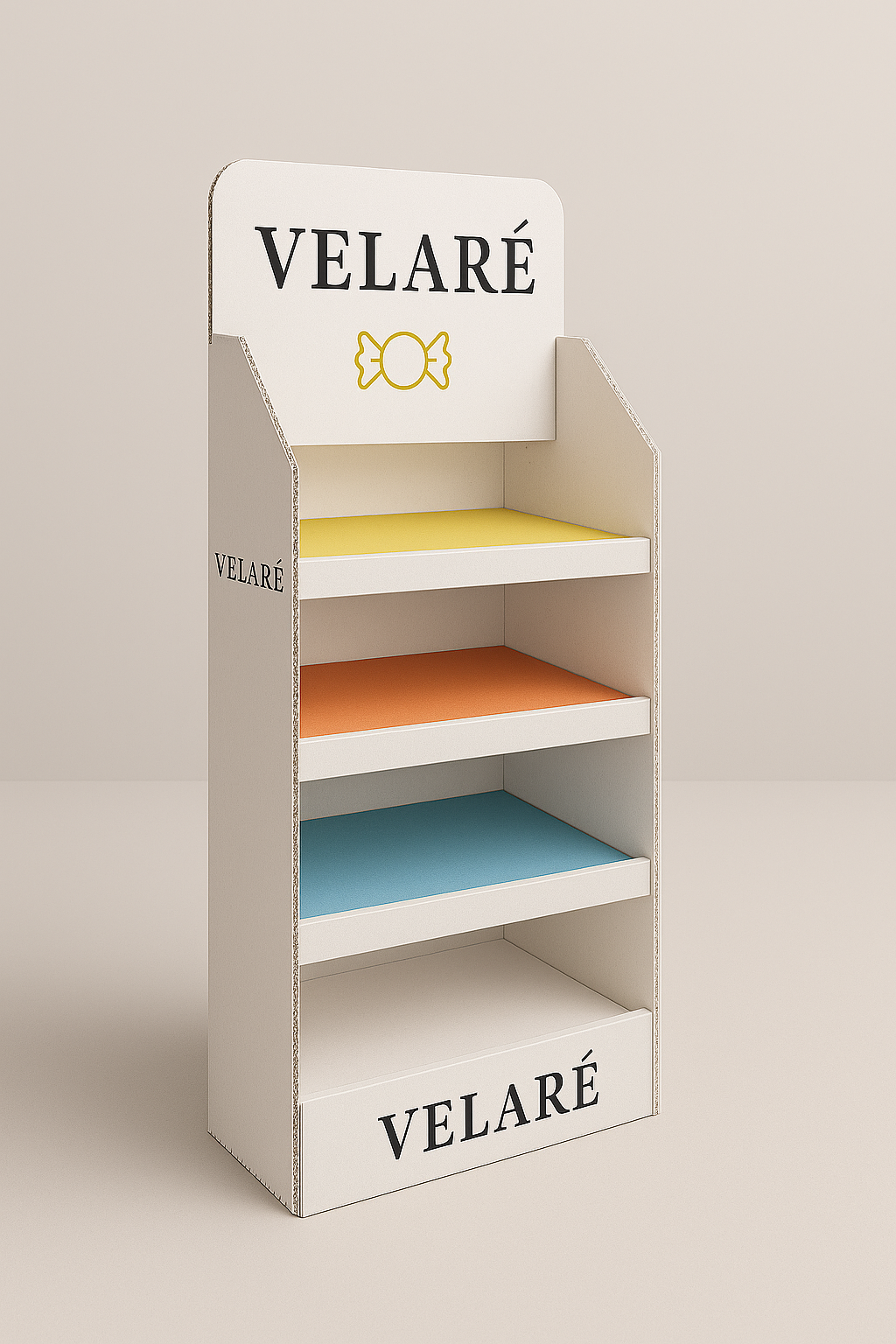
Freestanding shelf units and tiered displays with headers, side panels, product facings, and a footprint matched to the retail space.
Open-top structures for bagged, boxed, promotional, or impulse products where access, capacity, and sidewall strength matter.
Trays, product organizers, dividers, backers, and small shelf units that help keep the presentation orderly and easy to replenish.
Contour-cut figures, product shapes, easel-back signs, kickstands, and layered pieces for retail, events, launches, and photo moments.
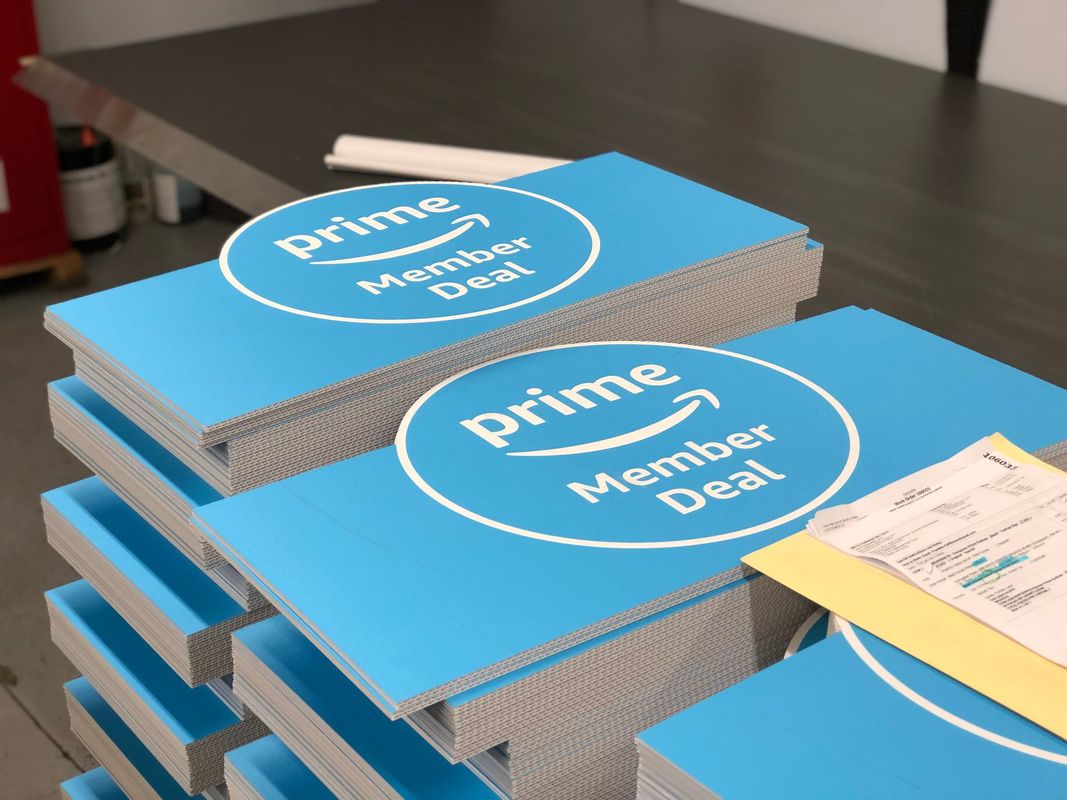
Replacement graphics, display headers, side wings, bases, braces, shelves, inserts, easels, and other custom-cut display parts.
Structure before volume
Product weight, shelf span, center of gravity, access, restocking, handling, and shipping all affect the build. A design that looks good in a rendering still has to stand, hold the intended load, assemble correctly, and arrive usable.
For load-bearing or retailer-specific programs, an approved structural drawing and a prototype or test fit may be required before production. When specialized engineering, testing, or retailer certification is needed, we will identify that before release rather than guess.
Individual item size, packed weight, total load, orientation, and the number of products per facing.
Maximum width, depth, height, aisle clearance, counter space, end-cap rules, and retailer specifications.
Temporary promotion, recurring program, event use, expected handling, moisture exposure, and service life.
Who builds it, how quickly it should set up, access for restocking, and whether instructions or numbered parts are needed.
Flat versus assembled, carton dimensions, protection, master packs, freight class, and destination requirements.
Prototype quantity, production run, artwork versions, languages, retailer variants, and location-specific allocations.
Start with what you have
You do not need to force an early concept into the wrong production path. Send the material that already exists and we will review the next step.
Production ready
We review artwork, panel orientation, cut and crease layers, material, print, finishing, quantity, packing, and delivery requirements before pricing or production.
Existing reference
Provide the physical sample, photographs, dimensions, product, and desired changes. We can review what may be reproduced, adapted, or redrawn for production.
Early concept
Share product dimensions, weight, quantity, placement, retailer limits, deadline, and budget range. We will help identify the information or structural support needed next.
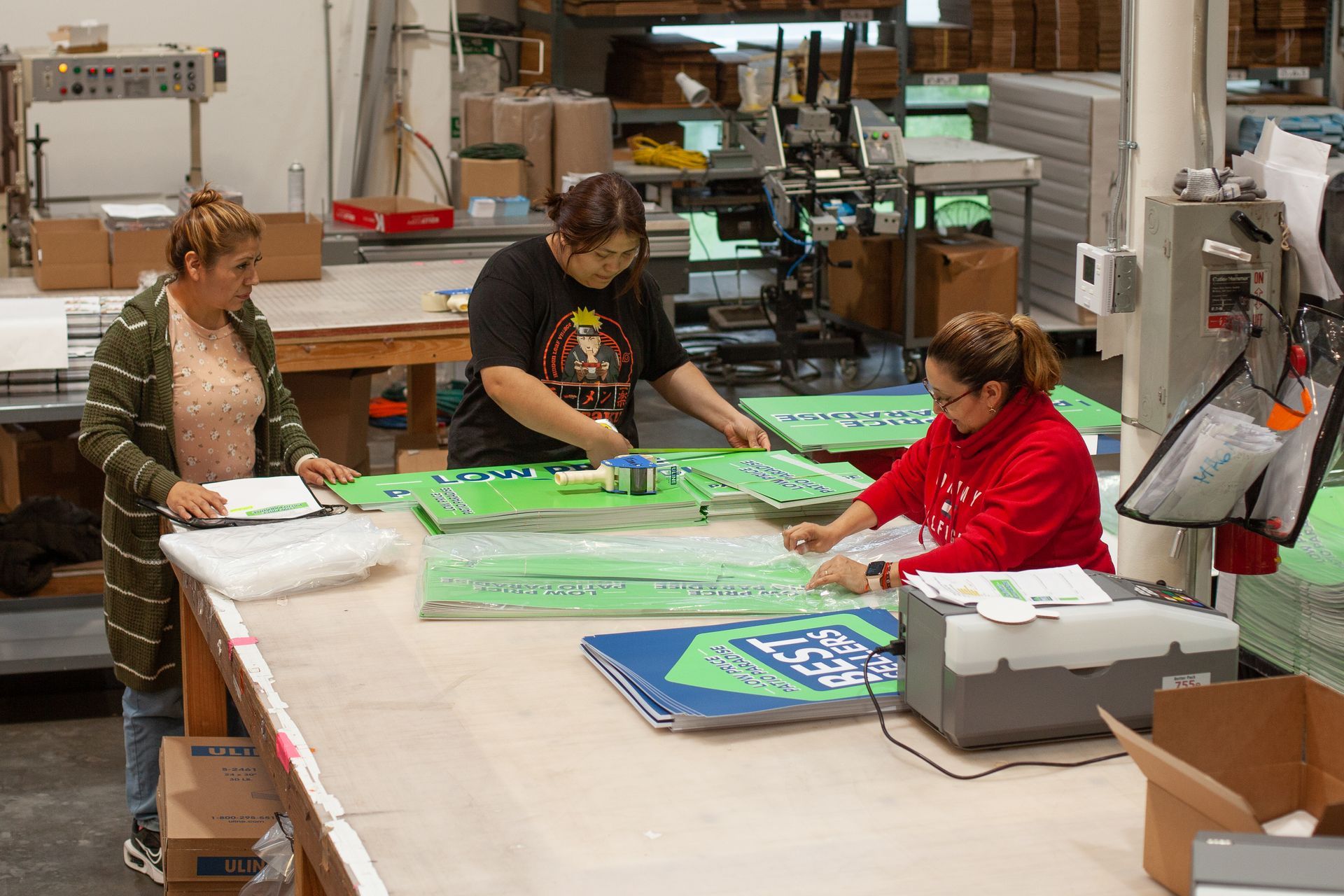
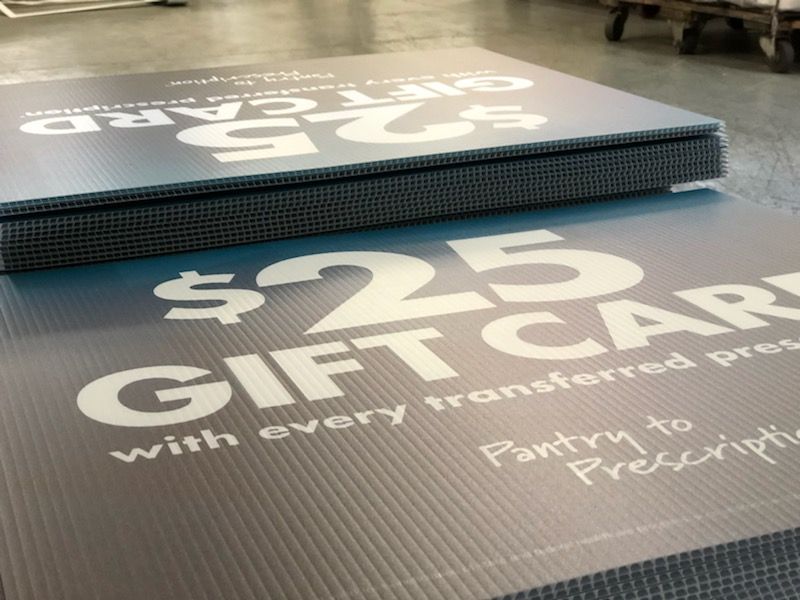
Production at Execuprint
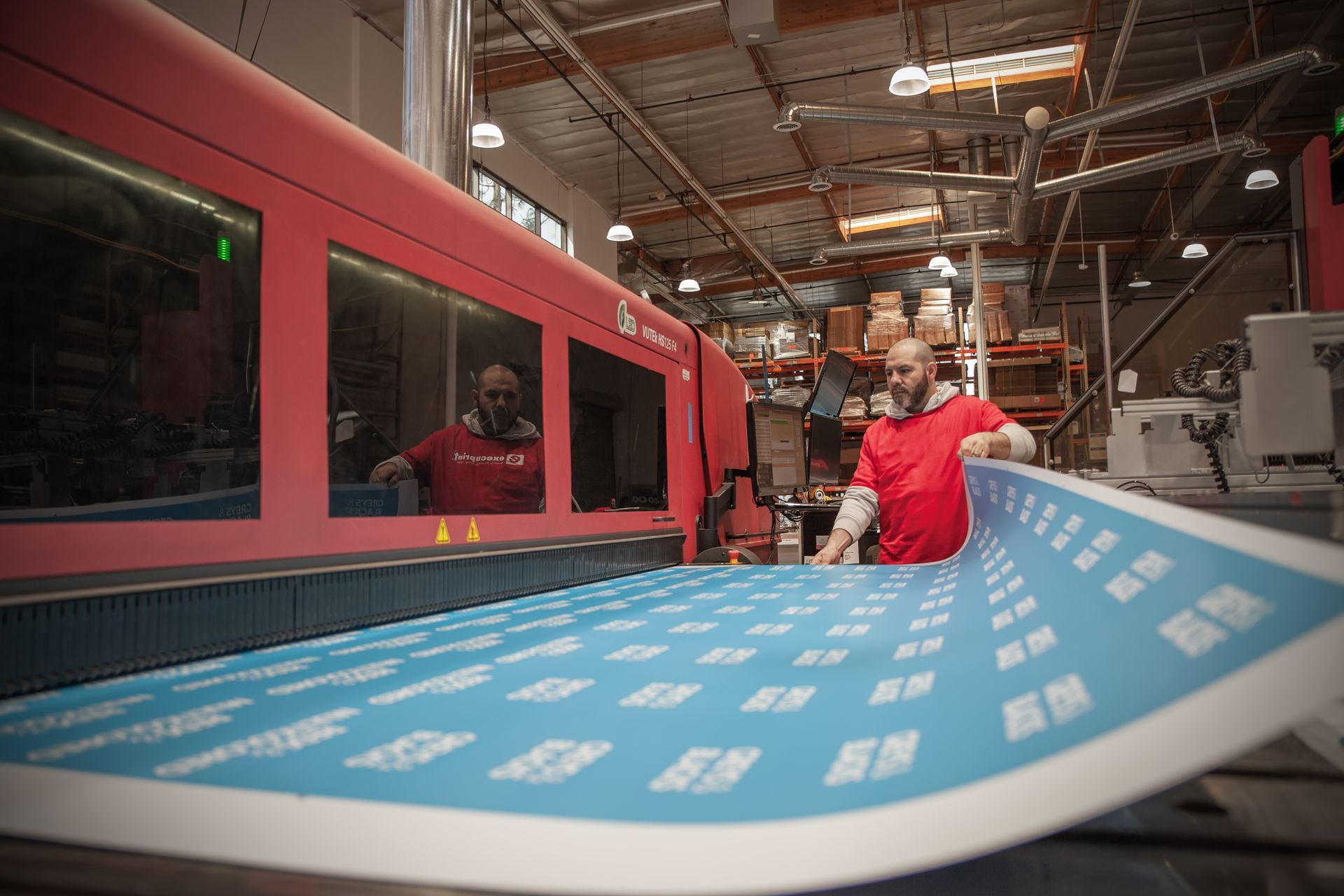
The right production path depends on the structure, material, quantity, graphic coverage, finishing, and final destination. We review those pieces together before the job reaches the floor.
Full-color production on compatible rigid and flexible materials, including white-ink and multilayer options when appropriate to the job.
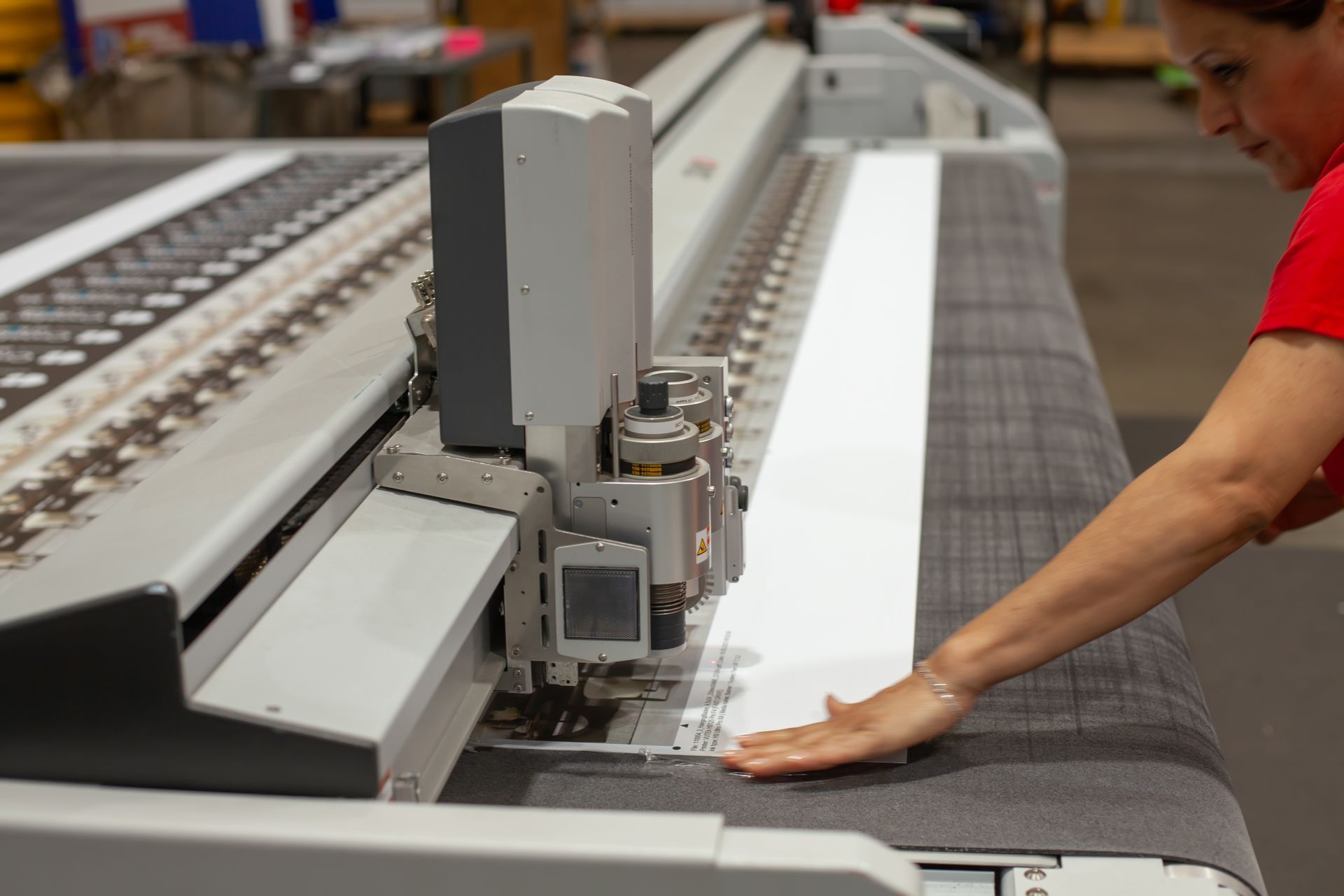
Camera-registered cutting, oscillating-knife work, scoring, routing, and contour finishing for display parts, prototypes, and custom shapes.
Folding, tape application, laminating or coating where appropriate, component counting, sample assembly, and production preparation.
Flat-pack or assembled options, instructions, kit labels, location-specific quantities, custom cartons, storage, and coordinated shipping.
Configuration examples
Use these as visual starting points—not fixed catalog sizes. Final dimensions, board, support, graphics, and packing are developed around the approved project requirements.
The images in this section are digital renderings created to illustrate common display configurations. They are not photographs of completed customer projects.
Rendering
 Rendering
 Rendering
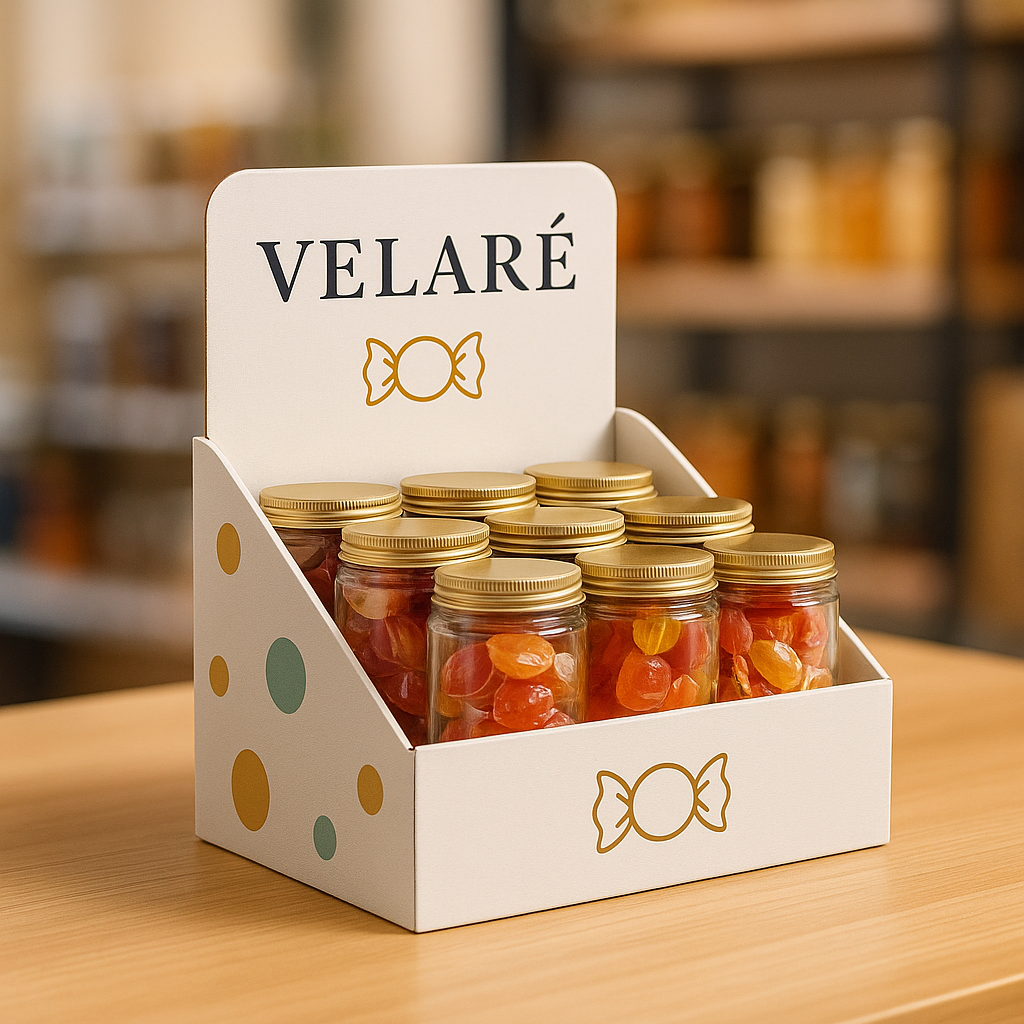 Rendering
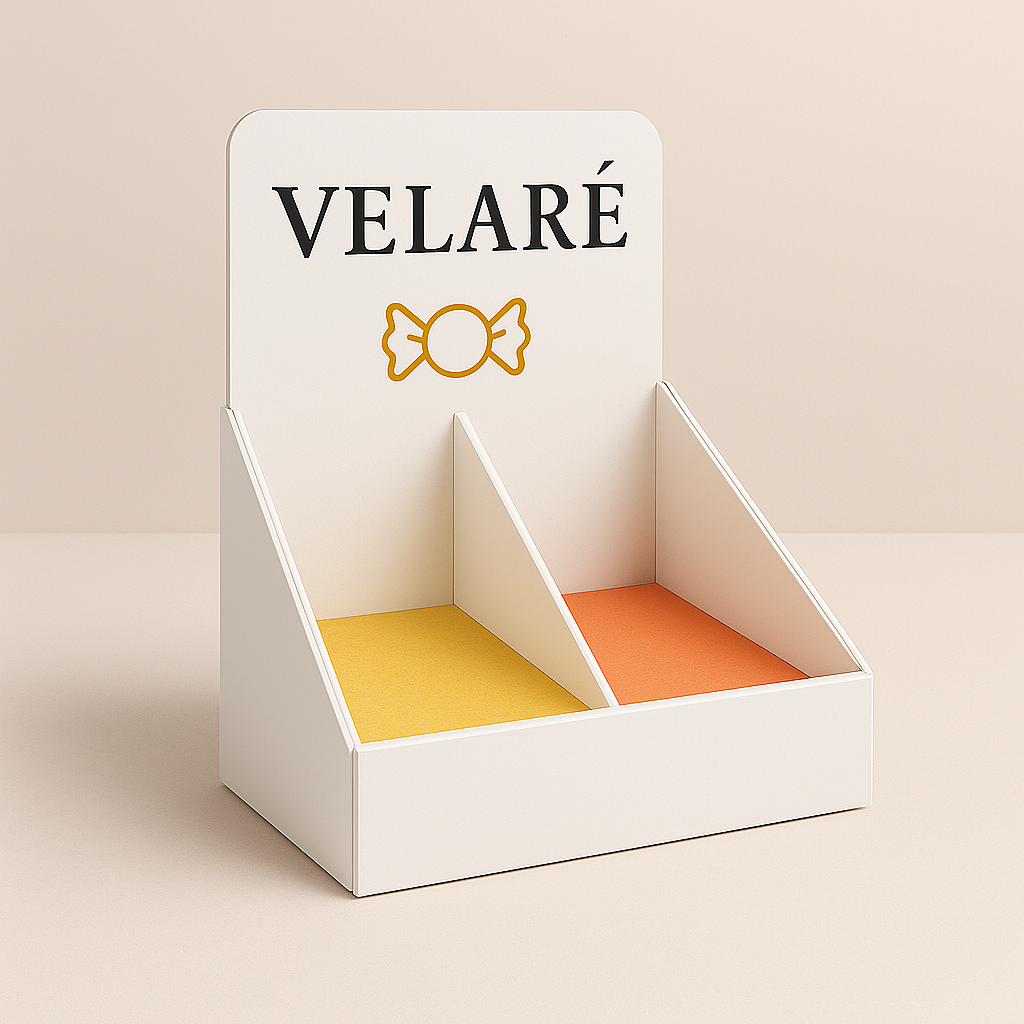 Rendering
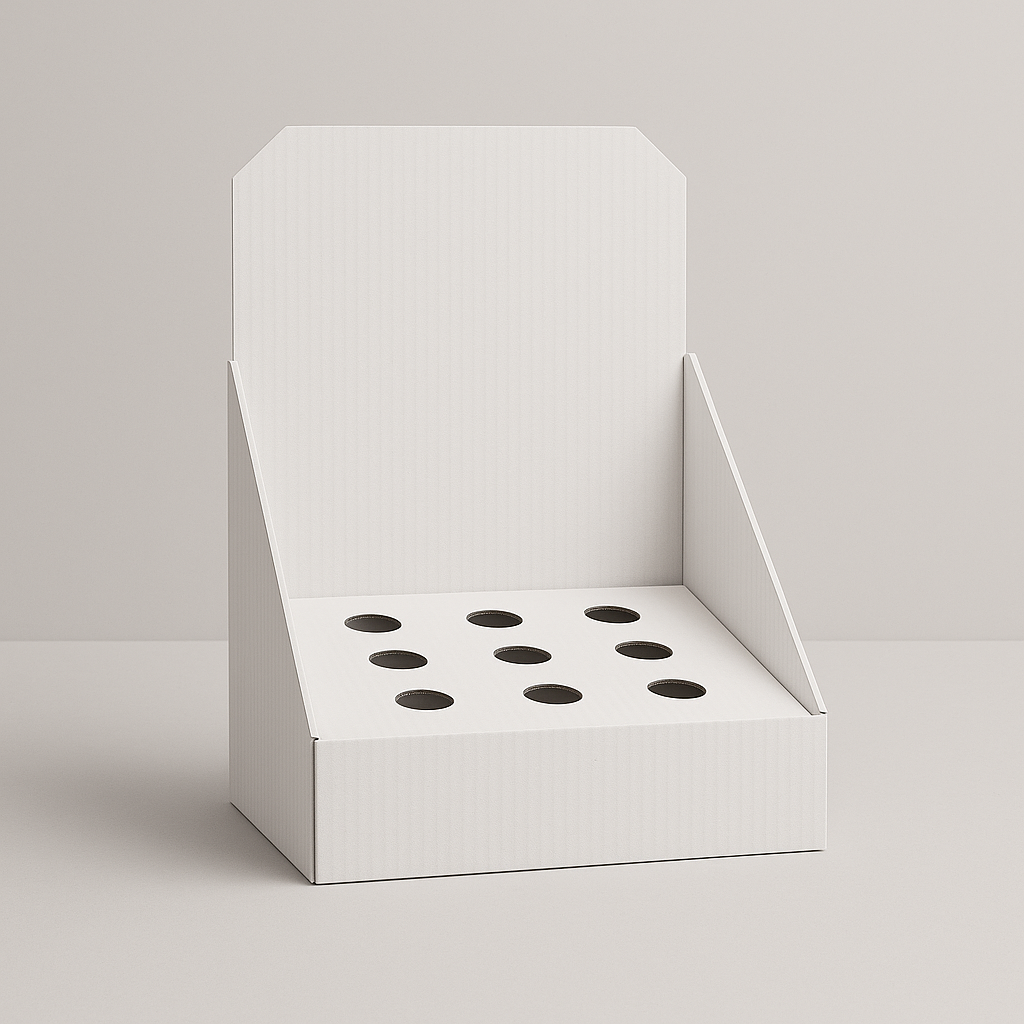 Rendering
A controlled production path
Every project is different, but the sequence below keeps the key decisions in the right order.
Product, load, placement, footprint, quantity, retailer rules, timing, and destinations.
Approved dieline, board or substrate, scores, supports, panel orientation, and assembly method.
White sample, printed sample, product fit, stability, graphics, setup, and carton planning as required.
Print, registered cut, score, route, fold, tape, count, inspect, and prepare approved components.
Assemble or flat-pack, add instructions, kit by location, label cartons, and coordinate delivery.
Choosing the right page
The two often work together, but they solve different parts of a retail program.
A physical structure that holds, organizes, supports, or presents a product.
Signs and campaign pieces placed across windows, shelves, counters, walls, floors, aisles, and multiple locations.
For a clearer estimate
Complete specifications are welcome, but not required to begin. The items below help us understand whether the request is ready to estimate or still needs structural decisions.
Not all display structures can be priced accurately from finished dimensions alone. Board grade, caliper, flute direction, supports, folds, glue or tape areas, assembly, and shipping method can change the production specification.
Send the approved dieline, product information, retailer brief, rough sketch, sample photographs, quantities, and due date. We will review what is ready and follow up on the details that still need to be resolved.